Introduction: The search landscape has changed — has your store?
In 2026, the way people search for products online looks fundamentally different from just two years ago. Buyers are no longer typing simple keywords into a search bar. They're asking AI assistants nuanced questions, using voice search on the go, and discovering brands through algorithmically curated content that responds to real-time trends.
For e-commerce brands in the US, Australia, and New Zealand, this shift isn't just interesting — it's urgent. The brands winning online today are those that understand why people are searching, what they're searching for right now, and how to position their store directly in the path of that intent.
This post breaks down exactly how trending search data is reshaping e-commerce growth in 2026, and what your brand can do about it — from finding untapped product opportunities to optimising your Shopify store for the traffic that converts.
1. What are "trending searches" — and why do they matter for e-commerce?
Trending searches are queries experiencing a rapid spike in search volume over a short period. They can be driven by:
- Seasonal events — back-to-school, Black Friday, EOFY sales in Australia/NZ
- Cultural moments — viral social media trends, sporting events, award shows
- Macroeconomic shifts — cost-of-living pressures driving searches for "budget alternatives" or "buy now pay later"
- New technologies — searches for AI tools, smart home devices, and sustainable products
- Health and lifestyle movements — gut health, longevity, minimalist living
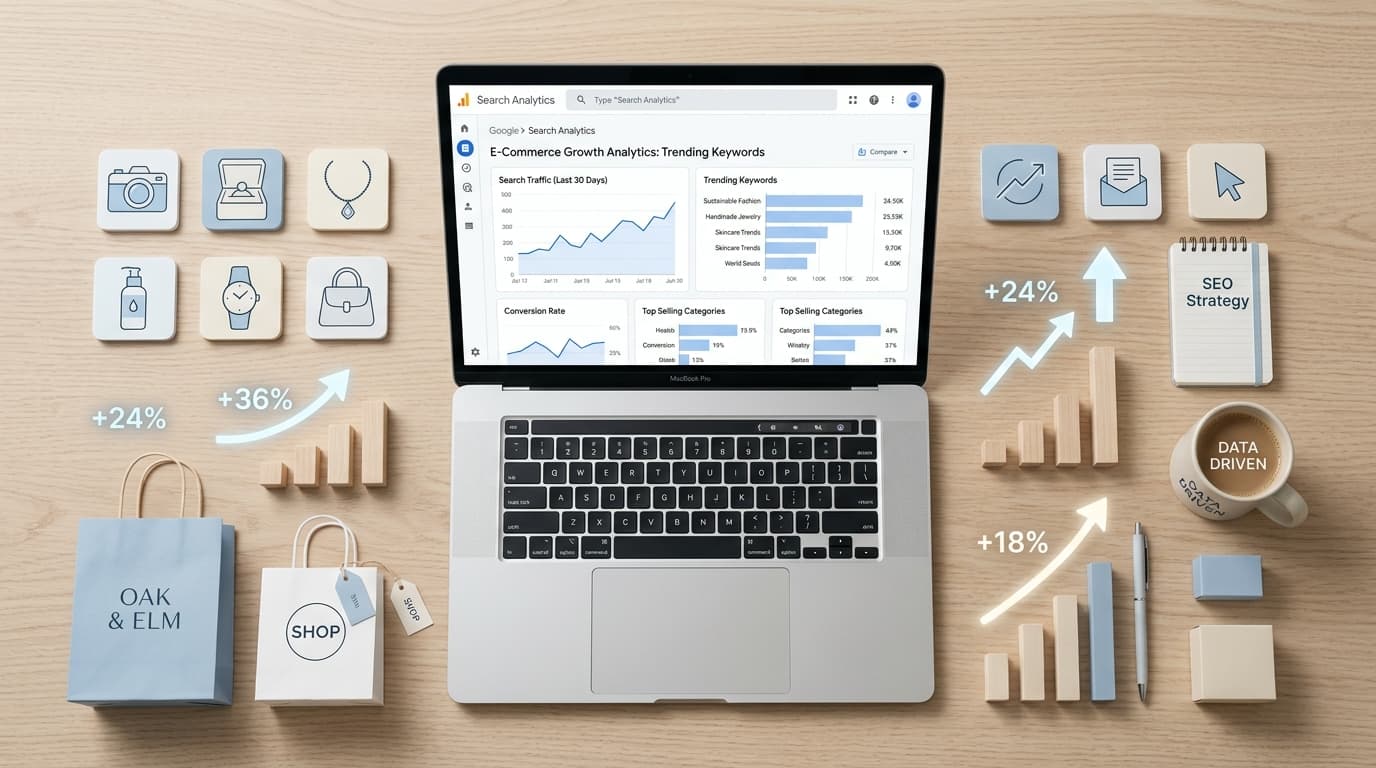
For e-commerce brands, trending searches represent a live map of buyer intent. When a product or category suddenly surges in search volume, it means real people are actively looking to buy — right now. If your store appears in those results, you capture high-intent traffic at exactly the right moment. If it doesn't, a competitor does.
The difference between a store that grows and one that stagnates often comes down to whether the brand is listening to search trends or ignoring them entirely.
2. How AI search is changing the game in 2026
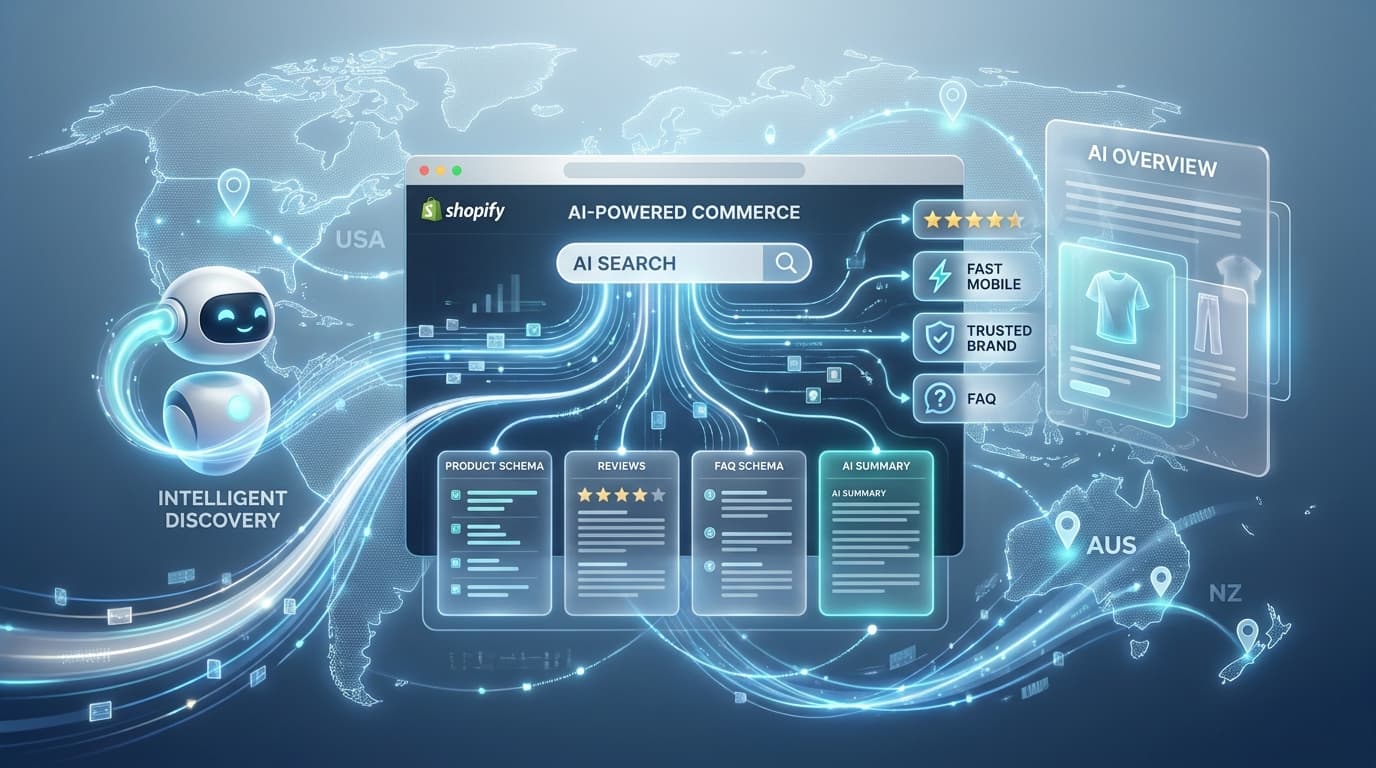
Perhaps the most significant shift in the 2026 search landscape is the rise of AI-powered discovery. Google's AI Overviews, ChatGPT Shopping, and Perplexity's product recommendations now sit at the top of many commercial search results, surfacing answers — and products — before users ever scroll to traditional listings.
This has created both a challenge and an opportunity for e-commerce brands.
The challenge: Zero-click searches are rising. Users get answers from AI summaries without clicking through to your website. If your brand isn't cited in AI-generated responses, your visibility can drop even while your rankings technically hold.
The opportunity: AI search rewards authority and specificity. Brands that produce detailed, well-structured, trustworthy content around trending topics are being surfaced in AI Overviews. This is new real estate — and it's still relatively uncrowded.
What this means for your store
- Structure your content to answer questions directly. Use headings that mirror real search queries ("What is the best sustainable activewear for hot climates?") and answer them immediately.
- Build topical authority around your niche. A Shopify store with 15 well-written blog posts around a specific category will outperform a store with 200 thin product pages every time.
- Optimise for conversational and long-tail queries. AI search has amplified the value of long-tail keywords because users phrase questions naturally when talking to AI assistants.
3. Shifting buyer intent: what consumers are actually searching for in 2026
Understanding buyer intent has always been foundational to good SEO — but intent signals are shifting quickly. Here's what's trending across US, Australian, and New Zealand e-commerce markets this year.
"Value with purpose" searches
Cost-of-living pressures are still top of mind, but consumers aren't just looking for the cheapest option. Searches like "best quality budget [product]", "affordable sustainable [product]", and "worth it review [product]" reflect buyers who want reassurance alongside affordability.
Hyper-specific product searches
Vague searches like "running shoes" are declining. Buyers now search for "lightweight trail running shoes for wide feet under $150" because AI tools have trained them to be specific.
"Near me" and local intent for online stores
This is particularly relevant for Australian and NZ brands. Searches combining "fast shipping Australia", "NZ made", or "ships from New Zealand" are surging as consumers prioritise speed and local provenance.
Experience and how-to searches pre-purchase
Consumers increasingly research how to use a product before they buy it. Searches like "how to style [product]" or "[product] tutorial" are growing — and they represent buyers who are close to purchasing.
4. Using trending search data to find product opportunities
One of the most underutilised strategies in e-commerce is using search trend data not just to drive traffic to existing products, but to identify new products worth stocking.
Tools to monitor trending searches
- Google Trends — Free, powerful, and underrated. Compare search interest over time, filter by country (US, AU, NZ), and identify rising queries before they peak.
- Google Search Console — Shows what queries people are already using to find your store. Look for rising impressions with low CTR — these are opportunities your site is almost capturing.
- Ahrefs / Semrush Keyword Explorer — Filter keywords by "trending" or "rising" to find emerging categories with lower competition.
- TikTok and Instagram search suggestions — Social search is increasingly a leading indicator. A product going viral on TikTok in February will likely show a Google search spike in March.
This kind of search-led product and content strategy is what separates growing stores from stagnant ones. An e-commerce SEO partner can help you build this into a repeatable system.
5. Optimising your Shopify store for trending search traffic
Identifying trending opportunities means nothing if your Shopify store isn't technically prepared to capture and convert that traffic.
Collection page optimisation
Collection pages are often the highest-traffic, highest-converting pages on a Shopify store — and the most neglected. For each major trending category:
- Write a unique, keyword-rich description at the top of the collection page (200–400 words minimum).
- Use heading tags (H1, H2) that include your target trending keywords.
- Add internal links to related collections and blog posts.
- Include an FAQ section at the bottom targeting long-tail questions.
Product page SEO
- Use trending keyword variants in your product title, meta title, and meta description.
- Write product descriptions that answer the questions buyers are actually asking, not just list features.
- Add structured data (schema markup) for product reviews, pricing, and availability.
- Ensure product images are compressed, named descriptively, and include alt text using relevant keywords.
Site speed and Core Web Vitals
Trending traffic surges are wasted if your store loads slowly. A one-second delay in page load time can reduce conversions by up to 7%. Regularly audit your Shopify theme, compress images, remove unnecessary apps, and use a fast CDN.
Mobile-first everything
Over 70% of e-commerce browsing in 2026 happens on mobile. Trending searches — especially those driven by social media — are almost entirely mobile. If your store experience is clunky on a phone, you will lose the sale.
6. Building a content strategy around trending search data
The brands dominating organic search in 2026 aren't just optimising product pages. They're building content ecosystems that pull buyers in at every stage of the purchase journey.
The content funnel for e-commerce
- Top of funnel (awareness): Trending topic articles, listicles, "best of" guides, and how-to content. Example: "The 10 Most Searched Skincare Ingredients of 2026 (And Why They Work)"
- Middle of funnel (consideration): Comparison posts, buyer's guides, and product reviews. Example: "Collagen Powder vs Collagen Capsules: Which Is Better for Gut Health?"
- Bottom of funnel (decision): Landing pages, product collection pages, and specific "buy" intent content. Example: "Shop Marine Collagen Powder — Free Shipping to Australia & NZ"
Content formats winning in 2026
- Long-form blog posts (1,500–3,000 words) that comprehensively cover trending topics
- Comparison tables — great for AI search citations and featured snippets
- Video embeds — YouTube and TikTok videos embedded on product and blog pages increase time-on-page and trust
- UGC integration — embedding customer reviews, social proof, and real-use photos on product pages
A well-executed content strategy doesn't just bring traffic — it brings the right traffic that converts. Our digital marketing services are designed to help e-commerce brands build exactly this kind of compounding content engine.
7. Turning impressions into clicks and clicks into conversions
Improve CTR with compelling meta titles and descriptions
Your meta title and description are your ad copy in the search results. Lead with the trending term in the meta title, include a value proposition ("Free NZ Shipping," "2026's Best-Reviewed"), and use numbers and specificity.
Reduce bounce rate with strong page-to-intent matching
If a user clicks a search result and doesn't immediately see what they expected, they leave. Ensure every page you optimise for a trending keyword delivers exactly what that keyword promises — above the fold, within seconds.
Optimise for conversion with social proof
Trending traffic often includes first-time visitors who don't know your brand. Reduce friction and build trust instantly with star ratings and review counts, "X people bought this this week" trust badges, clear return and shipping policies, and secure checkout indicators.
Use retargeting to recapture trend-driven visitors
Not everyone buys on the first visit. Set up retargeting campaigns on Meta and Google to recapture visitors who arrived via trending search traffic but didn't convert — they are warm leads worth pursuing.
8. A note for brands in Australia and New Zealand
While much of the e-commerce SEO conversation is US-centric, Australian and New Zealand brands operate in markets with their own search behaviours, seasonal patterns, and competitive dynamics.
- Seasonality is reversed. Black Friday falls in early summer, EOFY sales hit in June. Build your trending content calendar around these local patterns, not Northern Hemisphere assumptions.
- Local search trust is high. NZ and AU buyers actively search for locally based or stocked products. Communicate your local presence clearly in metadata and on-page content.
- Market competition is lower in long-tail. Many US brands haven't optimised for AU/NZ-specific long-tail keywords — this is an opening for local brands to rank for trending terms that larger international competitors overlook.
- TikTok search is growing fast among 18–35 year olds in both markets. If your audience skews younger, ensure your content is discoverable on social search as well as Google.
Frequently asked questions
Common questions from e-commerce brands about trending search, SEO, and digital growth in 2026.
Ready to turn trending searches into more traffic and sales?
Our team works with e-commerce brands across the US, Australia, and New Zealand to build search-led growth strategies that drive real, measurable results.
Explore SEO & digital growth Get in touch today